Zero Waste Design & Slow Making
Sustainability in my work is defined through material choice and making processes. I work primarily with natural fibres, prioritising those that are responsibly sourced, minimally processed, and suitable for long-term use.
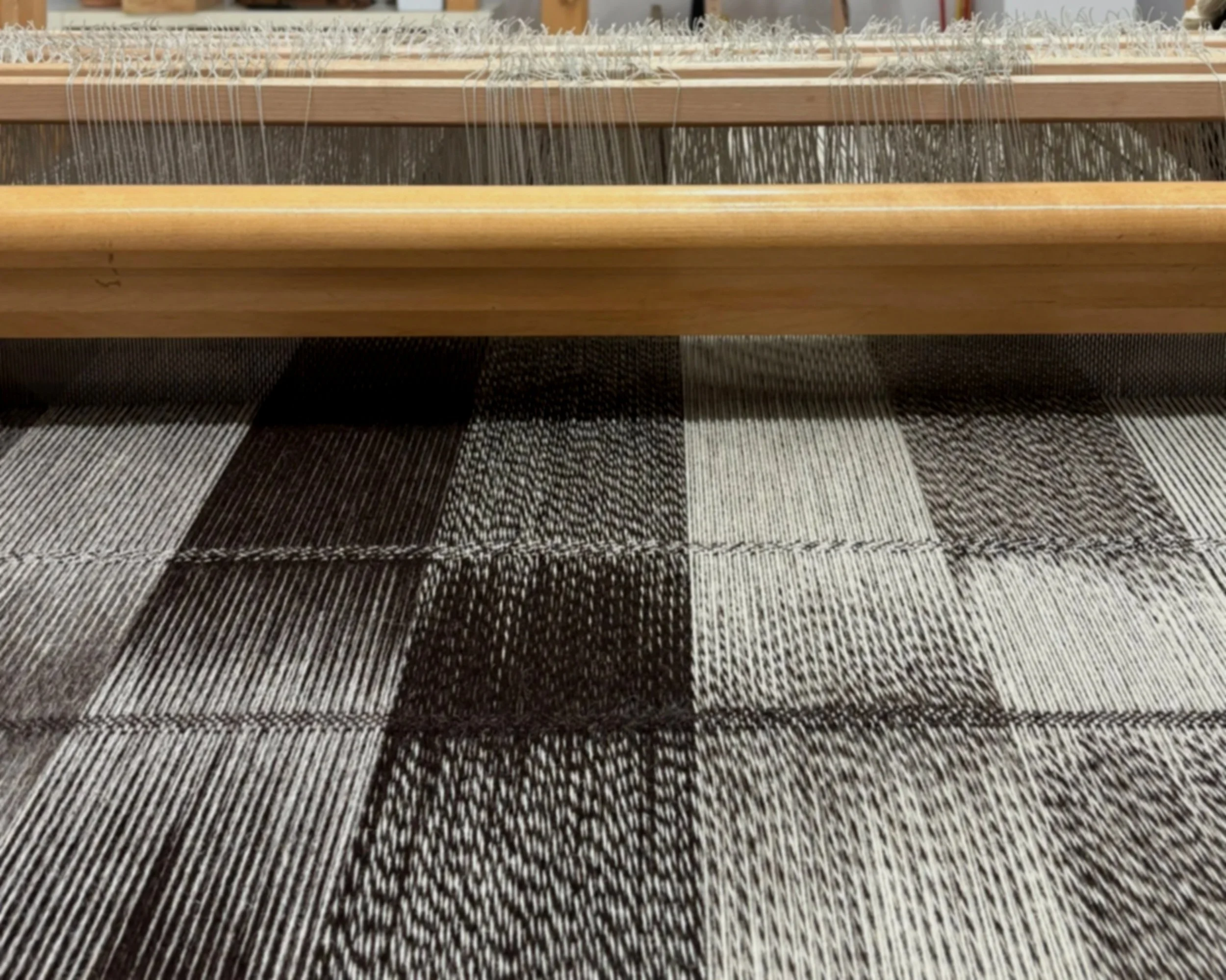
Wherever possible, I use undyed and hand-spun yarns, significantly reducing the energy, water, and chemical input typically associated with textile production. I also incorporate surplus and waste natural yarns into my work, extending the lifecycle of existing materials and minimising unnecessary production.
My practice is rooted in a zero-waste approach to weaving. Materials are used with intention, and processes are adapted to reduce offcuts and excess. Each textile is produced on a small scale, allowing for close control over both material behaviour and resource use.
Wool is one of my primary materials due to its durability, renewability, and biodegradability. It requires minimal chemical treatment, performs across different climates, and maintains its integrity over time. Alongside wool, I work with a range of natural fibres including silk, recycled cotton, linen, hemp, jute, and other plant-based materials.
I prioritise fibres in their raw or minimally altered state. This not only reduces environmental impact, but also preserves the inherent qualities of the material, its texture, strength, and responsiveness.
This approach is not based on idealisation, but on practical decisions made at every stage of the process. The result is a body of work that is materially efficient, environmentally considered, and designed for longevity.
